
Fixed Capital vs Working Capital: What’s the Real Difference?
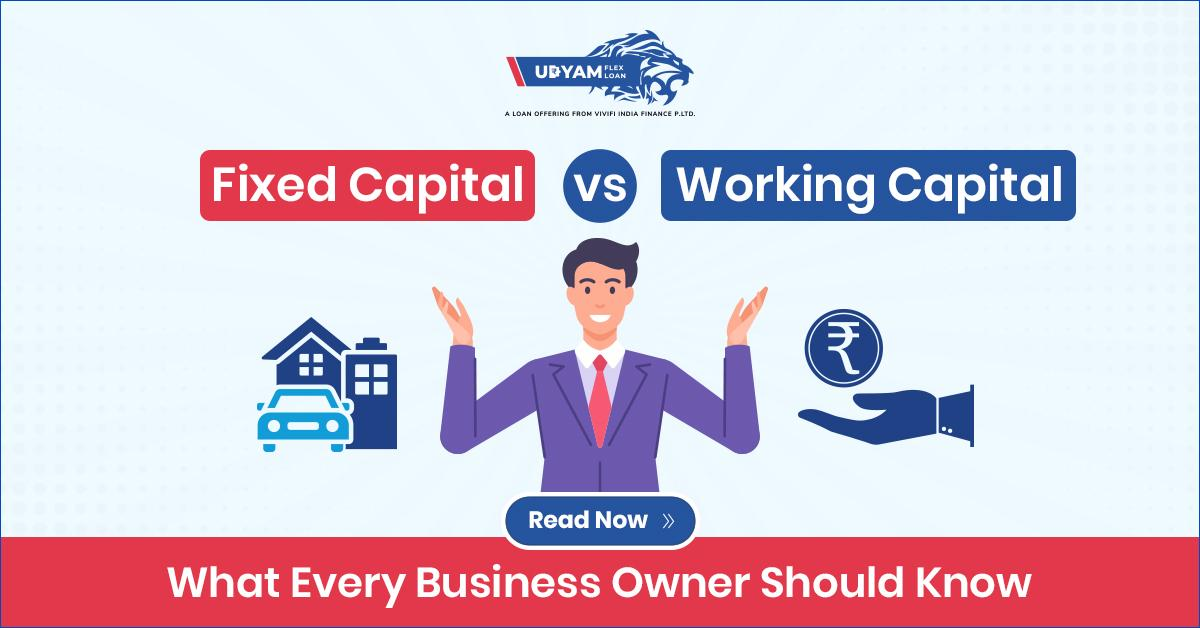
When people start or grow a business, two terms come up very often: Fixed Capital and Working Capital.
At first glance, both sound like they are about the same thing. Both connect to business expenses and operations. But they serve very different purposes, and understanding that gap matters more than most business owners realise.
Sometimes a business is doing well overall, but daily operations still become difficult. Other times, heavy investment goes into equipment or infrastructure, and then regular expenses become hard to manage. Poor planning around fixed capital and working capital is usually what sits behind both problems.
Let’s look at what each one means and why both matter for keeping a business stable.
Table of Contents
What Fixed Capital Actually Means
Fixed capital is money used for long-term business assets. These are things a business buys to operate over several years, not things purchased for daily use.
Some common examples:
- Machinery
- Equipment
- Commercial vehicles
- Office setup
- Furniture
- Factory infrastructure
These assets don’t get purchased every month. They are long-term investments that help the business function and grow over time.
To put it simply:
- Opening a manufacturing unit? Buying machines falls under fixed capital.
- Opening a retail store? The interiors and billing systems also count as fixed capital.
Fixed capital builds the structure of the business. Everything else runs on top of that foundation.
Fixed Capital vs Working Capital
Fixed Capital
- Long-term business assets
- Machinery, equipment, infrastructure
- Business setup and expansion
- Not for daily operational expenses
Working Capital
- Day-to-day business operations
- Inventory, salaries, supplier payments
- Keeps business activity running
- Shifts regularly based on operations
Read on to know more!
What Does Working Capital for a Business Mean
While fixed capital supports the structure, working capital supports what happens every single day. This is the part most businesses feel most often and most immediately.
Working capital for a business typically covers:
- Inventory purchases
- Supplier payments
- Salaries and wages
- Utility bills
- Day-to-day operational expenses
Unlike fixed capital, these needs keep coming back regularly.
For example:
A kirana store might already have shelves, refrigerators, and a billing system in place. But it still needs fresh inventory restocked every week. That ongoing requirement is working capital. Without it, even a well-set-up business starts to feel the pressure quickly.
Fixed Capital vs Working Capital Explained Simply
The simplest way to understand the difference:
Fixed capital helps you set up or expand the business. Working capital helps you run it every single day.
| Fixed Capital | Working Capital | |
| Purpose | Long-term business assets | Daily operational needs |
| Frequency | Used occasionally | Used regularly |
| Function | Supports infrastructure | Supports operations |
| Examples | Machinery, equipment, setup | Inventory, salaries, utilities |
One builds the business. The other keeps it moving.
Why Businesses Need Both
Some businesses pour everything into setup and then underestimate what daily operations actually cost. Others manage day-to-day well but delay infrastructure improvements for too long. Neither works well on its own.
Here is why balance matters:
- Fixed capital builds capacity for growth
- Working capital stops daily operations from breaking down
- Together, they give the business a chance at real stability
Cash flow can dry up fast without working capital, even in a business that looks strong on paper. And without fixed capital, there is no real foundation to grow from. Many small businesses manage their initial setup reasonably well but face pressure when it comes to daily operations.
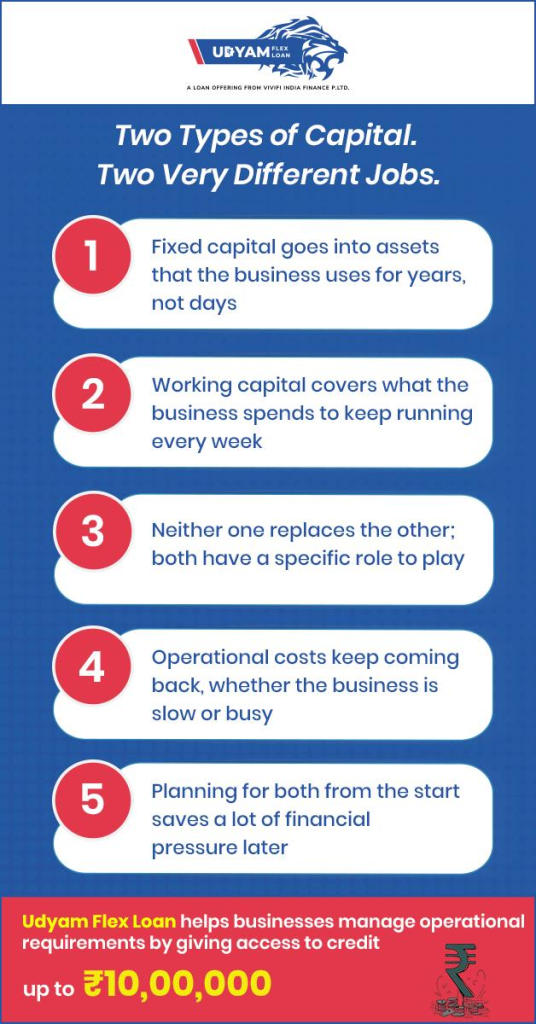
Common Situations Where Businesses Struggle
Operational pressure shows up in different ways depending on the business, but some patterns repeat across almost every industry:
- Customers take longer than expected to pay
- Demand drops or spikes with the season
- Stock needs restocking before payments come in
- Operational costs go up without warning
Retail, manufacturing, and distribution businesses tend to feel this most. A good month in sales doesn’t always mean cash is sitting in the account when it is actually needed. This is why working capital for business needs to be planned ahead, not figured out during a crunch.
How Business Loans Help Manage Operational Needs
Business loans are not always taken for expansion. Plenty of businesses use them simply to keep day-to-day operations from stalling during tight periods.
They typically help with:
- Keeping inventory levels consistent
- Paying suppliers without delays
- Covering operational costs during slow months
- Filling short-term cash gaps before payments arrive
Applying through an online MSME loan process involves less paperwork and faster turnaround compared to traditional lending, which is important when timing matters.
How to Apply Through Udyam Flex Loan
The steps are simple and the whole thing happens online.
Step 1: Begin your application
Register using your mobile number.
Step 2: Share business information
Provide basic details about:
- Business type
- How it operates
- Monthly turnover or income
Step 3: Upload required documents
- Identity proof
- Address proof
- Bank statements
Step 4: Complete verification
Details get reviewed, and your eligible loan amount is assessed.
Step 5: Receive funds
Money moves directly into your bank account after approval.
Through Udyam Flex Loan, small businesses can get access to up to Rs. 10L to cover operational and business-related requirements.
Common Doubts Business Owners Have
- Is working capital only for struggling businesses? Not at all. Businesses that are doing well still need working capital to keep daily operations moving without interruption.
- Can fixed capital be used for daily expenses? Generally no. Fixed capital is for long-term assets. Pulling it toward daily expenses creates a different set of problems.
- Which one is more important? Honestly, both. A business needs infrastructure to grow and consistent operations to survive. One without the other creates gaps sooner or later.
Conclusion
Fixed Capital vs Working Capital is not just a topic. It has real consequences for how smoothly a business runs from one month to the next. Fixed capital lays the foundation. Working capital for business keeps things active and moving every day. Both matter, but for small businesses, operational pressure tends to show up first and most often.
When that pressure builds, having access to structured support makes a real difference. Udyam Flex Loan helps small businesses get up to Rs. 10,00,000 through a simple digital process, so operational needs don’t become a reason for the business to slow down. Building something takes effort. Keeping it going every day takes the right kind of support.